
Elephant foot: when the first layer is too wide
Elephant foot means the first few layers of a print bulge outward slightly. It usually happens because the first layer is compressed against the print bed more strongly than the layers above it. On decorative parts this may not matter. On precise fits and mating parts, it can be enough to stop assembly.
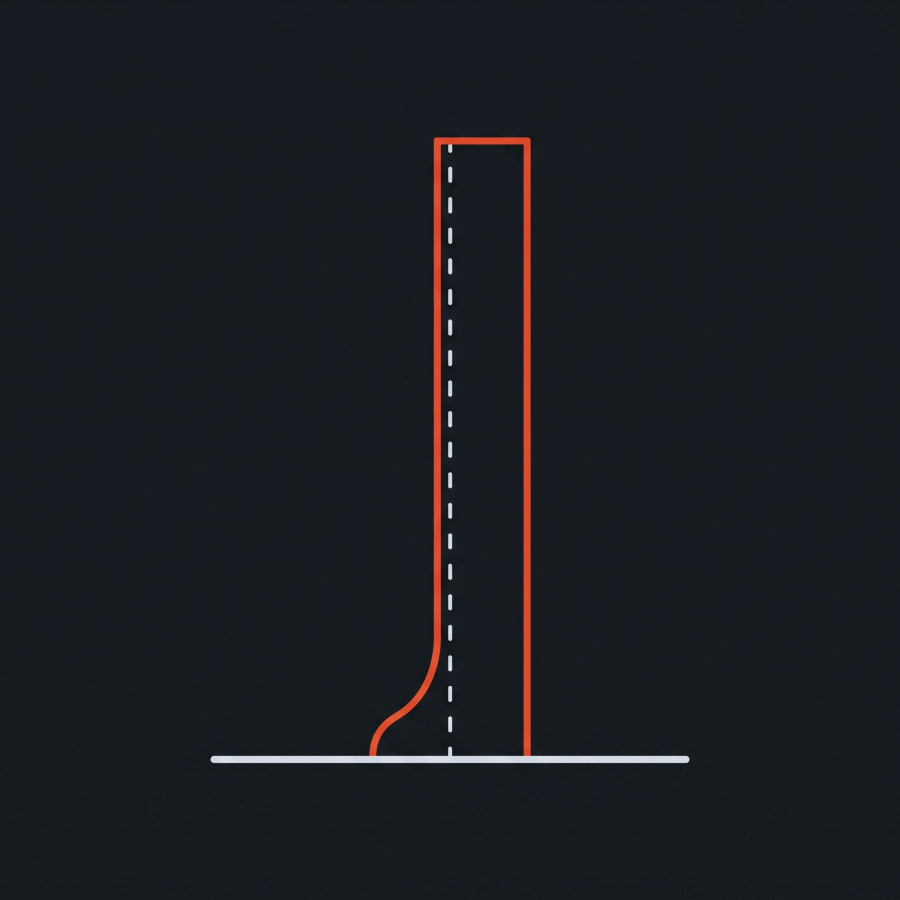
Why does elephant foot happen?
The first layer is intentionally compressed to ensure reliable bed adhesion. Too much compression can:
- increase the outside dimension
- distort lower edges
- interfere with mating parts
Check the first layer first
Do not immediately compensate only in the slicer. First check:
- Z offset / first-layer calibration
- bed temperature
- bed adhesion
- material profile
Slicer compensation
PrusaSlicer includes elephant-foot compensation. Prusa mentions values around 0.2 mm as a typical starting point for its own setup. This is not a universal value for every printer.
Design for mating parts
For parts that start directly on the bed and later need to fit into another component, these can help:
- a small chamfer
- a defined lower edge
- a better print orientation